


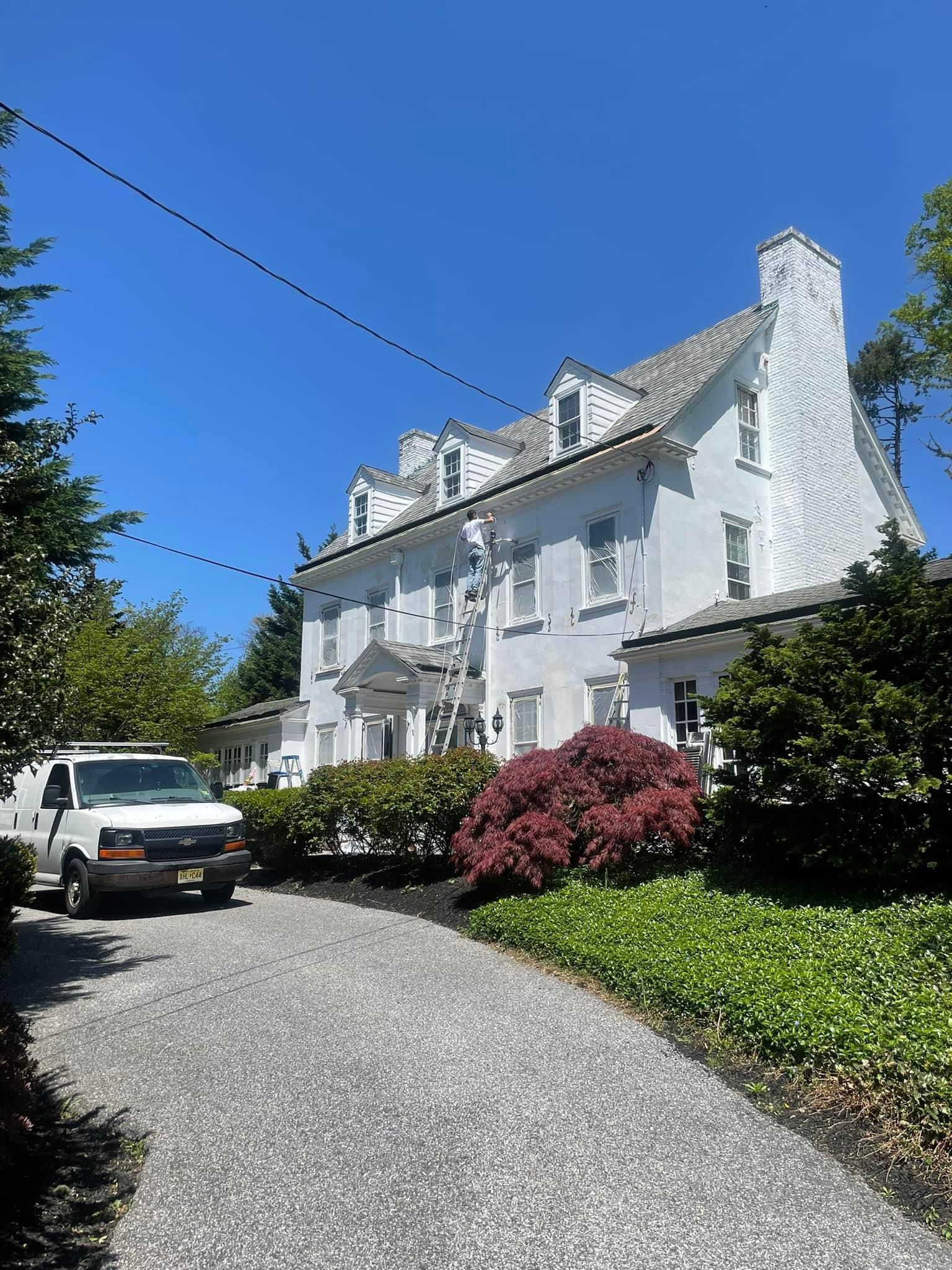


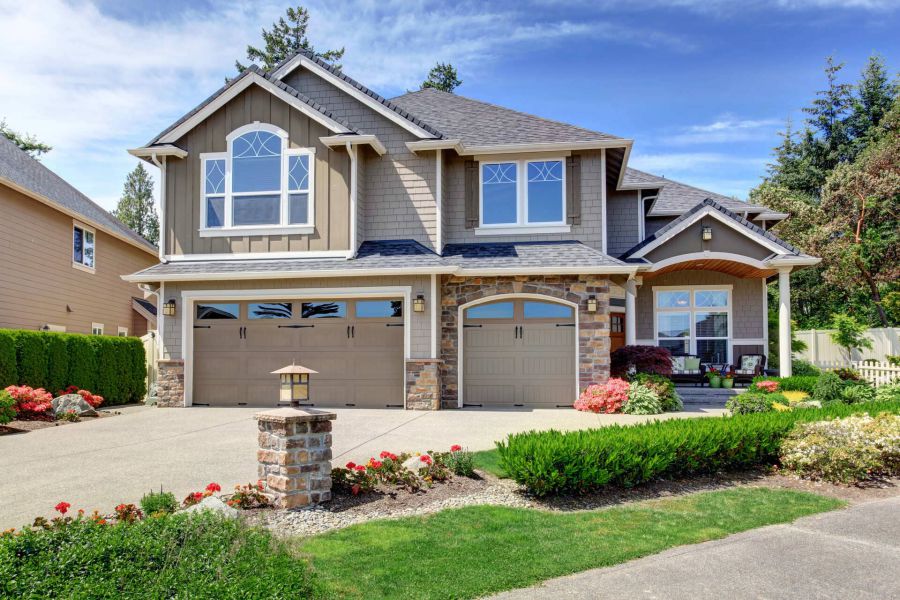
It starts with a wash
Chalked paint, pollen, mildew, and dirt all block adhesion. Every exterior we paint gets washed first, using low pressure and a cleaning solution rather than blasting water behind the siding. That is the same process described on our power washing page, and it is included in an exterior repaint rather than billed as an extra.
After the surfaces dry, we scrape loose paint, sand the transitions so the edges are not telegraphing through the new coat, and spot prime every bare area.
Repairs and sealing
Rotten trim, split fascia boards, and failed glazing do not get painted over. We replace or repair them first. Joints, corner boards, and window and door casings are caulked with an exterior grade sealant that stays flexible as the wood moves through the seasons.
Bare and weathered wood gets a primer that seals tannins so knots and cedar do not bleed through the topcoat. Metal gets a rust inhibiting primer.
Coatings for each surface
Siding takes a high grade acrylic that flexes with temperature swings and holds color against UV. Trim and doors take an exterior enamel with a harder film. Vinyl siding, when it is being changed to a different color, needs a coating rated for vinyl so the panel does not warp from heat absorption.
Decks and fences are a separate decision. Solid stain hides the grain and covers previous paint. Semi transparent stain shows the wood and is easier to maintain. We will tell you which one your deck is a candidate for.
Working around the weather
Coatings have real application windows for temperature, dew point, and humidity. Painting outside them is how a job ends up peeling. We watch the forecast, plan the sequence around it, and we will move a day rather than push a coat onto a surface that is about to get wet.
South Jersey gives us a long season, roughly spring through fall, plus mild stretches on either side. Booking early in the season usually means more schedule flexibility.
What is included in an exterior repaint
We write the scope out so there is no argument later about what was covered.
- ✓Low pressure wash of all surfaces to be coated
- ✓Scraping, sanding, and spot priming of bare and failing areas
- ✓Caulking of joints, corners, and window and door casings
- ✓Plants, walkways, roofs, and windows covered before spraying or brushing
- ✓Site cleaned daily and a full walkaround with you at the end

Common questions
Can you paint vinyl siding?
Yes, with limits. The new color has to be the same shade or lighter in heat absorption than the original, otherwise the panels can warp. Manufacturers publish vinyl safe color ranges and we stay inside them. The siding also has to be sound, since paint will not fix cracked or brittle panels.
Do you spray or brush?
Both, depending on the surface. Large runs of siding go faster and lay down more evenly sprayed and back rolled. Trim, doors, shutters, and detail work are brushed for control. Whatever the method, everything not being painted gets masked first.
Is power washing enough on its own, or do I need paint?
If the paint film is sound and the house just looks dirty and mildewed, a wash can buy you years. If the paint is chalking heavily, cracking, or peeling, washing will reveal the problem rather than solve it. We will look and tell you which situation you are in.
How long will the finish last?
That depends on the substrate, the exposure, and how much sun the elevation takes. South and west facing walls always weather first. Rather than quote a number we cannot control, we tell you what product we are using, what the manufacturer rates it for, and what maintenance keeps it looking right.
Related services
Common add ons for an exterior project.
