




Surface prep is the whole job
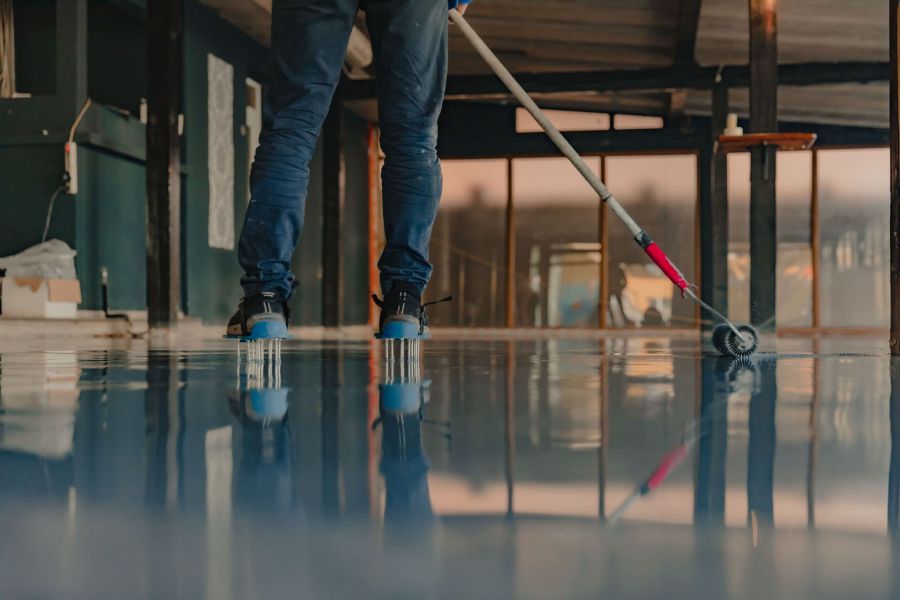
Concrete comes out of the form with a sealed, closed surface. Coating over it is why so many garage floors peel in sheets a year later. We open the slab mechanically with a diamond grinder pulling to a vacuum, which leaves a clean, uniformly profiled surface for the coating to key into.
Cracks are chased out and filled with a rigid patching compound. Spalled areas, pits, and old anchor holes get rebuilt. Oil stains are degreased and, where they have soaked deep, treated before anything is applied.
Coating systems we use
A garage floor is usually a two part epoxy base coat, a broadcast of vinyl flake for grip and to hide slab imperfections, then a clear topcoat. For floors that need to be back in service fast or that get direct sunlight, a polyaspartic topcoat is the better choice because it cures quickly and holds color.
You can also go with a solid color and no flake, or a metallic look for a finished basement. We will show you samples and explain what each one costs to maintain.
What the finished floor handles
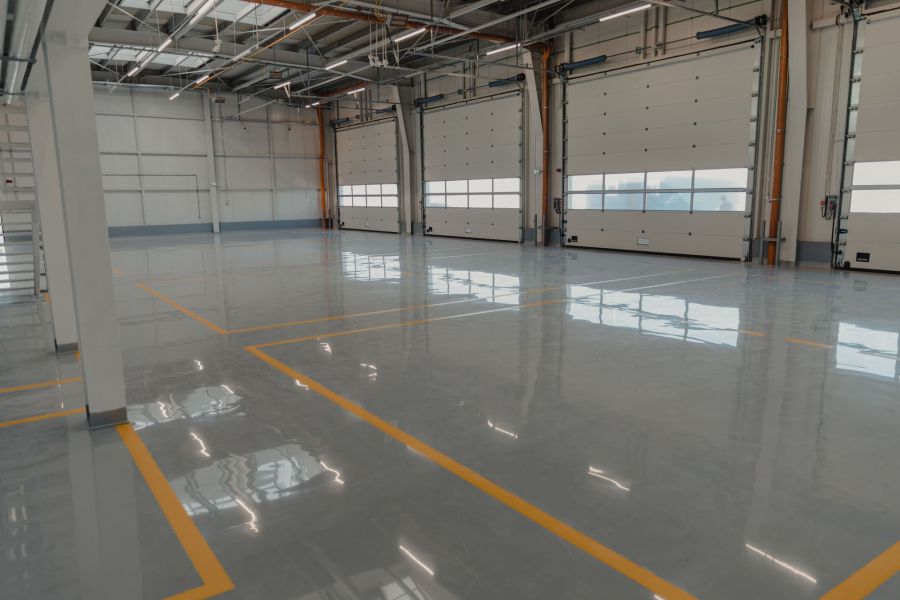
A properly installed system resists hot tire pickup, road salt tracked in all winter, dropped tools, gasoline, brake fluid, and antifreeze. Spills wipe up instead of soaking in. Dust from bare concrete stops, which matters if the garage shares air with the house.
The flake broadcast adds texture underfoot, so a wet floor is not a skating rink. If the garage doubles as a gym or workshop, tell us and we can adjust the topcoat and the grit level.
Where else it works
The same systems go down on basement slabs, laundry rooms, workshops, mudrooms, patios under cover, and commercial back of house floors. Each space gets a different topcoat, since a basement with moisture pushing up from below needs a different approach than a dry garage.
We check for moisture before quoting a below grade floor. If the slab is wet, we will tell you before you spend money on a coating that will not last.
How we install a floor
Most residential garages are a multi day job. Cure times are not optional, and we do not rush them.
- ✓Garage cleared and swept, edges cut in and taped off
- ✓Diamond grinding with dust collection, not acid etching
- ✓Cracks, pits, and spalls filled and sanded level
- ✓Base coat, flake broadcast, scrape and vacuum, then topcoat
- ✓Clear guidance on when to walk on it and when to park on it
Common questions
How long before I can park on it?
Foot traffic is usually fine the day after the topcoat. Vehicles need longer, because tires put a rolling load on a film that is still building strength. The exact wait depends on the product and the temperature, and we give you the number for your specific floor before we leave.
Do you acid etch instead of grinding?
No. Etching leaves residue, does not touch a sealed or power troweled slab evenly, and is the single most common reason a coating fails. Diamond grinding costs more in labor but it is the only prep we will stand behind.
My floor has cracks. Is it still a candidate?
Usually yes. Static cracks get routed out and filled, and the flake broadcast hides the repair well. A crack that is actively moving, or a slab that has heaved, is a different conversation. We will look at it and tell you honestly whether a coating makes sense.
How do I clean it?
Sweep or blow it out, then mop with warm water and a mild cleaner. Skip anything harsh or acidic, and rinse road salt off in the winter rather than letting it sit. Put mats under jack stands and pads under anything with sharp metal feet.
Related services
Floors often go in alongside these.

