


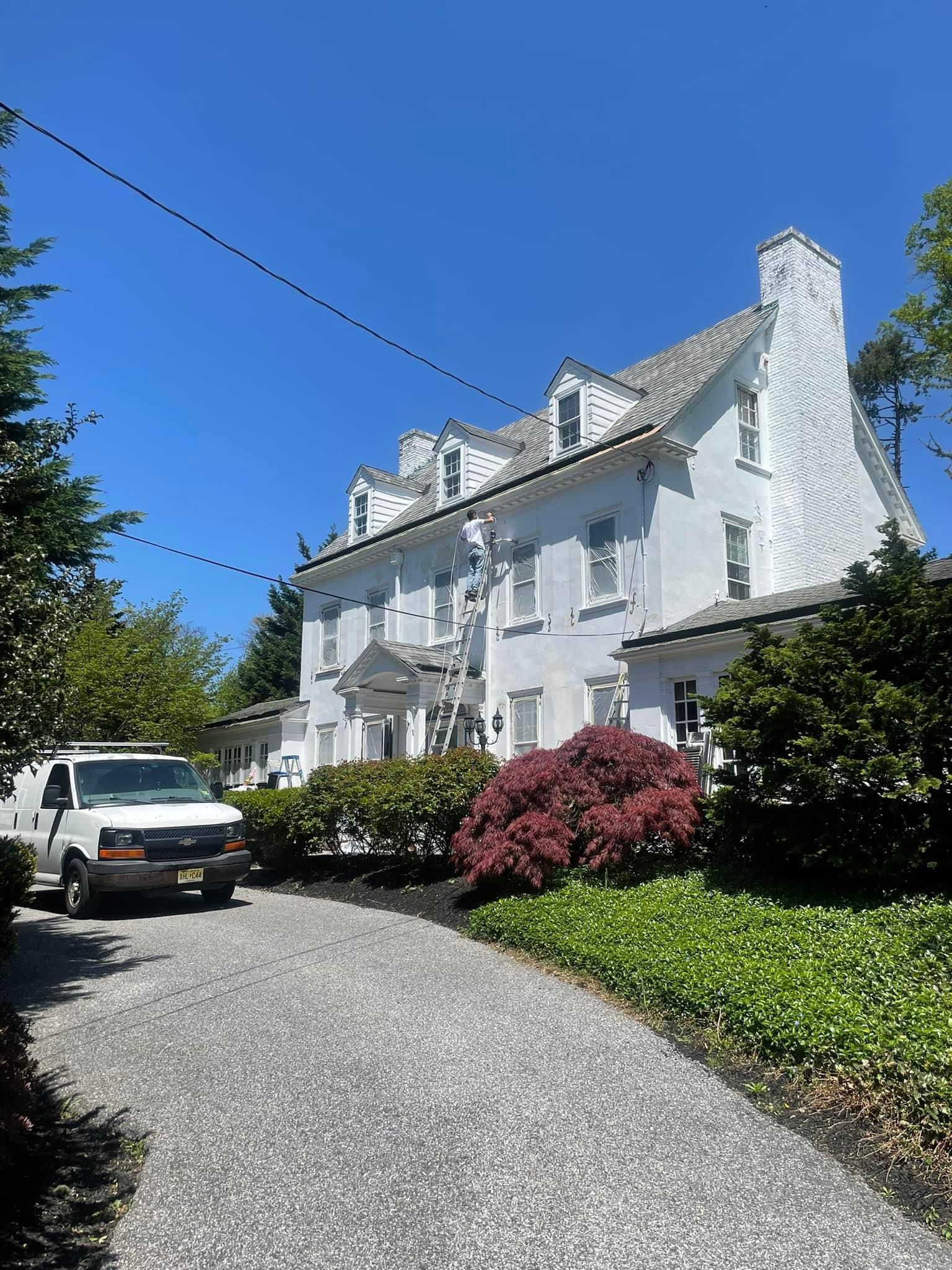


Chalking is the first honest warning
Run your hand down the sunniest wall of the house. If it comes back with a fine, dusty film in the color of your siding, the paint is chalking. That powder is the binder breaking down under sunlight and releasing pigment, and it means the film is at the end of its working life even though it still looks solid from the street.
Chalking on the south and west walls is normal well before the north side shows anything, because those walls take the most sun. It is not an emergency, but it is the signal to plan the job rather than wait for something to peel. A chalked surface also has to be washed thoroughly before new paint goes on, because fresh coating over loose chalk will not bond.
Peeling, cracking, and bare wood
Peeling is not a cosmetic problem. Once the film opens up, water gets behind it and into the substrate, and from there you are looking at swollen wood, rot at the joints, and a much bigger scope. Check the areas that get the most water first: under window sills, the bottom courses of siding near grade, fascia boards, and anywhere a gutter overflows.
Hairline cracking across a whole wall usually means too many coats built up over the years and a film that has lost its flexibility. Peeling in one localized patch usually means a water source. The fix is different in each case, so it is worth knowing which one you have before anyone quotes it.
Open caulk joints and failed glazing
Caulk fails before paint does. Walk the trim and look at the joints where trim meets siding, where window casings meet the wall, and at the corner boards. If those joints have opened, split down the middle, or pulled away on one side, water has a path in. Same with door frames and the seam above a garage opening.
This is one of the strongest arguments for repainting on schedule rather than on appearance. The paint film and the caulk joints work as one system, and the cheapest time to redo the joints is when you are already painting the trim.
Mildew, shade, and cedar
South Jersey summers are humid, and any wall that stays shaded through the day will grow mildew. Look on the north side, behind shrubs planted tight to the house, and under deep overhangs. Black or gray speckling that wipes off with a bleach solution is mildew, not dirt, and it has to be killed and washed off before painting or it will grow right back through the new coat.
Cedar siding and cedar shakes need their own attention. Cedar contains natural tannins that bleed through paint as brown or rust colored stains, particularly on the exposed edges and around nail heads. Those areas need a stain blocking primer, not a general purpose primer, or the stains will surface within the first year. Old cedar that has gone gray and fuzzy also has to be washed and sanded back to sound wood so the primer grabs something solid.
The New Jersey weather window
Practically, exterior painting in this area runs from April through October. What matters is not the calendar date but the conditions: surface temperature, humidity, and how much daylight is left for the coating to set before the temperature drops in the evening.
Spring can be too wet. Wood siding that has taken on rain needs days to dry out before it is safe to prime, and painting damp wood traps that moisture under the film. Midsummer brings the opposite problem, where a wall in direct afternoon sun gets hot enough that paint skins over before it can level or bond properly, so the crew works around the house following the shade. Early fall is often the best stretch we get: warm days, lower humidity, and enough hours of drying time. Late October gets risky because nights cool off fast and most coatings need the surface to stay above their minimum temperature for hours after application.
What the prep actually involves
The order matters. Wash the whole house first, including the mildew treatment, and let it dry. Scrape and sand every failed area back to sound material, then feather the edges so the transition does not show through the finish. Prime all bare wood and any stain prone areas. Reset or replace failed caulk after priming, so the caulk is bonding to primer rather than to chalk and dirt. Repair or replace rotted trim before anything gets painted over it. Only then do the finish coats go on.
Any exterior quote that does not describe those steps is quoting paint, not a paint job. Our exterior painting page lays out how we handle each of them. Call (609) 880-5924 Mon to Sat, 8:00 am to 6:00 pm and we will walk the house with you.
Questions about exterior repainting
Can I just paint the trim and leave the siding?
Often yes, and it is a reasonable way to stretch the budget. Trim takes more weather than the field of the siding, so it commonly needs attention first. The catch is color: fresh trim next to sun faded siding will make the siding look worse than it did before. If the siding is chalked, expect the contrast to be obvious.
Do I need to power wash before painting, or is that just an upsell?
The house needs to be clean, and washing is how that happens. It removes chalk, dirt, pollen, spider webbing, and mildew, all of which stop paint from bonding. What it does not do is replace scraping and sanding, and pressure aimed carelessly at old wood siding can drive water behind it. It is a prep step done with judgment, not a shortcut that eliminates the rest of the prep.
How long should an exterior paint job last around here?
It depends far more on prep and exposure than on the brand of paint. A south or west wall in full sun with no overhang will always need attention before a sheltered north wall. Bare wood that was primed properly and joints that were caulked correctly are what buy you years. Skipping either is what brings us back early.